PLM in Food & Spirits: Product Data as the Foundation of AI and Competitiveness
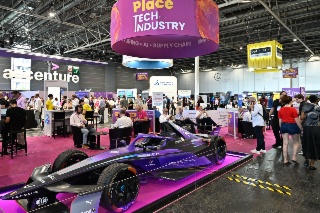
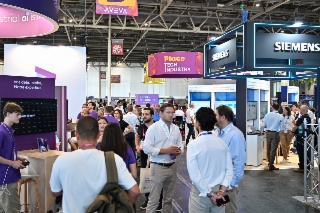
Long seen as the "poor relation" of digital transformation compared with the ERP, PLM (Product Lifecycle Management) is establishing itself as the foundation of product data — and the prerequisite for any reliable R&D AI. At the Tech For Industry Show, five experts compared notes: Emily Lara Rosales, Global R&D PMO & PLM Director (Pernod Ricard), Laure Burtin, DDAI Strategic Office Director Data, Digital & AI (Danone), Sarah Stocco, Principal PLM Solution Consultant (Infor), Hélène Boileau, Senior CPG PLM Consultant (Accenture) and Frédéric Russo, SVP, General Manager Central & Southern Europe (Infor).
Time to Market: Still Important, No Longer Enough
The Real Compelling Criteria: Right First Time and License to Operate
Every digital project promises a better time to market — so that's no longer a differentiating criterion for launching a PLM program. The compelling criteria: getting it right the first time and securing license to operate, with significant cost avoidance and cross-team efficiency as a result. A second issue: data, a potential AI accelerator — that's where real acceleration happens.
At Pernod Ricard: Very Different Innovation Speeds
The world's second-largest wine and spirits company, Pernod Ricard constantly manages a wide split: aged spirits whose development can take decades, and unaged formulated products with a time to market of just a few months. With a market being reshaped — lower barriers to entry, blurred lines between spirits, soft drinks and food — those who succeed will be the ones who start from the consumer, their needs and occasions, beyond the traditional industrial view.
PLM, the Central Nervous System of Product Data
Neither Just Another Tool, Nor the ERP's Little Brother
PLM centralizes all information and processes tied to a product, from design to delisting: recipes, formulations, packaging, bills of materials, specifications. It doesn't replace the ERP — it makes ERP execution more reliable. Sarah Stocco (Infor) takes the image further: PLM isn't the ERP's little brother but "the parent of product data." If upstream data isn't reliable, downstream only inherits that unreliability — and building in design to cost and design to sustainability early turns an imposed constraint into a design lever.
Value Levers: Single Data… and Employee Experience
Beyond a single, reliable, centralized data source, one often-overlooked lever: the HR lever. When data is scattered across R&D, quality, SharePoint, Excel and ERP systems, teams exhaust themselves checking, searching, re-entering data — leading to frustration, even attrition. PLM frees up time for the core job: developing products. Add to that avoiding costly reworks and errors (incorrect nutritional labeling) for smooth, on-time, compliant launches — without overlooking the unquantified value in the business case.
Moving From Idea to Project: The Triggers
Pernod Ricard: R&D Globalization, Agility, ERP Transformation
Identified 4-5 years ago and raised by the field, the need found its triggers: globalizing the R&D function — moving from around twenty variably structured teams toward a global function sharing knowledge, projects and validated data, opening the door to reuse and platforming; the agility challenge posed by raw material and energy costs, US tariffs, and regulation that has become a lever of economic warfare — with structured specifications allowing a move from one site to another; and the ongoing ERP/master data transformation, which requires structured input data upstream.
Danone: Sponsorship, Integration, Storytelling — and Cybèle at Themis's Table
Three years after launch, three key factors: top-level sponsorship ("otherwise we don't get started"); engagement across functions — this isn't an R&D-only project, and nothing builds buy-in better than quickly demonstrating value on two integration points; and positioning PLM as a cornerstone of design to delivery, down to the storytelling. The anecdote: at Danone, the project is called Cybèle — the equivalent of Rhea, goddess of creation, one of the twelve Titans — seated at the table of Themis… the name of the in-house ERP. "We won't go any lower in the hierarchy." Final advice: cut the elephant down to size — bill-of-materials integration started at one plant, then ten, before considering all 200.
Humans at the Center: Transformation Before the Tool
A Process Project, Not an IT Project
At Pernod Ricard — "creators of conviviality," a group built through successive acquisitions where each entity developed its own culture — PLM transformation is first and foremost a process transformation, supported by a digital solution, not the other way around. Faced with low-turnover R&D populations, sometimes working in their native language and on Excel, announcing a global AI-powered tool can create anxiety: the benefit needs to be co-built with them, not imposed top-down. And the program leader must be patient and resilient — years can pass before the trigger point, and that's only the beginning.
Ambassadors, a Project Team, and a Name Chosen Together
Key success factors on the change management side: mapping stakeholders as early as possible (resistance isn't always where you expect it, and the best sponsor isn't necessarily the most senior — but the one who genuinely believes in the project); building a network of ambassadors — trusted relays in the field, not just trainers; and building a collective: a PLM project is cross-functional (R&D, marketing, quality, supply chain, regulatory), ideally led by a physical or virtual project team where business and IT speak the same language. Down to the collective choice of the project's name — the first step toward ownership.
Bringing Operations Teams on Board Through Data… and AI
Implementing a PLM is like "putting the church back in the middle of the village": establishing sources of truth, data accountability — and for a function, owning its data "means existing within the company." Good news: thanks to AI, operations teams have come to understand the value of maintaining data — ten years ago, the reaction was "why would I bother?" What remains is helping them take the next step: eliminating manual entry of ingredient and packaging specifications, via a supplier portal or semi-automation.
AI, Agents and Process Mining: The Next Level
AI first to relieve low-value-added tasks — searching for information, summarizing a document, extracting data — since this friction is a daily source of frustration. Then agentic AI: conversing with agents and delegating — identifying why a workflow is stuck and proposing actions, or pre-simulating an ingredient change and its impact on the formula and finished product. And process mining applied to NPDI: analyzing where time is lost and where loops form — a deviation from the standard isn't always an error, sometimes it's a field practice worth adding to the process catalog. The fundamental shift, according to Sarah Stocco: "for a long time, we asked users to adapt to the solution; now, it's the solution that has to adapt to users" — speaking the language of the industry, and now that of the users. With one safeguard shared by all: if upstream data is weak, AI only amplifies that weakness — and creates a dangerous false sense of control.
Closing Advice
Data first (where is it, who's responsible for it, what's it used for), then process, then only the tool — with people running throughout, from start to finish. PLM as a differentiation lever, at a time when every company already has an ERP. An opportunity for functions to talk to each other and progress together. And for those just starting out: map where complexity creates value — and where it doesn't. That's where the real pain points lie, a starting point specific to every company.
Watch the full panel, along with the other Tech For Industry Show replays, on our dedicated page.