Operational excellence is a company's ability to execute its strategy more consistently and more reliably than its competitors. In a plant, it means production that meets its commitments on quality, cost, lead time and safety, and that improves every day. It rests on a management system, a culture of discipline and methods such as lean or Six Sigma; digital tools accelerate it, provided they come after the method.
Operational excellence: definition
Operational excellence is not a method but a result: two companies following the same strategy do not get the same results, and the one that executes it better carries less risk and has lower costs. It rests on two components:
- a management system: managed processes that interact and take risks into account;
- a culture of operational discipline: doing what is expected, the way it is expected, every time.
Several approaches contribute to it: lean, Six Sigma, total quality or the EFQM model. The frontline manager plays a central role, as the person who guides operators and keeps the rules alive day to day.
Safran, for example, has made its management system, processes and performance indicators common to all its companies, under the name One Safran. The group relies on Lean Sigma for its improvement projects, on QRQC for daily management and on participative innovation, which lets every employee put forward ideas.
The methods: lean, Six Sigma, kaizen, TPM, 5S
- Lean comes from the Toyota Production System. The term was popularised by the book The Machine That Changed the World, published in 1990 by MIT researchers. Lean aims to eliminate waste, or muda, of which there are seven: overproduction, waiting, transport, unnecessary steps, inventory, unnecessary motion, corrections and rework. It rests on two principles: just-in-time (producing at the pace of demand, in a pull flow) and jidoka (stopping production at the first defect, making errors impossible).
- Six Sigma was born at Motorola in 1986 and became known in the 1990s at General Electric. It reduces process variability in five steps: define, measure, analyse, improve, control (DMAIC). Lean deals with flow, Six Sigma with variation: the two are often combined as Lean Six Sigma.
- Kaizen is continuous improvement through many small improvements made every day, often following the Deming cycle: plan, do, check, act.
- TPM (total productive maintenance) takes preventive maintenance further to increase equipment efficiency, quality and safety.
- 5S, also born at Toyota, organises the workstation around five principles: sort, set in order, shine, standardise, sustain.
Measuring: OEE and shop-floor indicators
Overall equipment effectiveness (OEE, called TRS in French) is the basic indicator of operational excellence in production. It measures the share of a machine's or line's theoretical maximum output actually achieved in good parts. It is calculated by multiplying three rates:
- availability, reduced by breakdowns and changeovers;
- performance, reduced by minor stops and slower speeds;
- quality, reduced by defects and start-up losses.
Each company sets its own calculation rules, for instance on how breaks or preventive maintenance are counted: two comparable plants can therefore show different OEE figures. OEE is mainly used to spot which rate is falling, in order to choose the right lever: quick changeover (SMED), TPM, 5S. Automatic collection of production data, through supervision systems and standards such as OPC UA, makes it easier to calculate; this is one of the roles of MES software.
Alongside OEE, the shop floor tracks its safety, quality, delivery and cost indicators, reviewed every day in short meetings in front of a board.
Managing day to day: routines and problem solving
Operational excellence is played out in management routines. QRQC (Quick Response Quality Control), as Safran describes it, is an approach to daily performance management and rapid problem handling at the appropriate management level. Every day, teams review the previous day's deviations, analyse causes (for instance with the "five whys") and track their actions until they are closed.
Digital tools change this routine. At Renault, in the morning QRQC, the full data on an incident is available fifteen minutes after the event, and each manager builds their own management views from the exposed data.
Operational excellence and digital: method first
The manufacturers who spoke at Tech for Industry Show 2026 share one rule: you do not digitise a process full of waste. Digital tools reinforce a method that already works; they help measure continuously, surface problems faster and extend a good practice to every site.
Safran gives an order of magnitude: according to its benchmark, digitalisation alone brings 5 to 10% in productivity. To target 30 to 40% in its 70 French plants, the group adds automation (loading cells, AGVs, connected tools for operators).
What manufacturers said at Tech for Industry Show
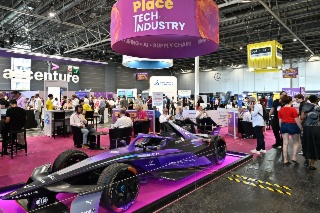
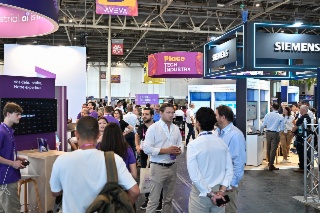
At Tech for Industry Show 2026, at Paris Expo Porte de Versailles:
- Forvia bases its vision of the 2030 plant on lean: an excellence system for operations, and lean applied to the design of production equipment and to programme launches. The group first digitised its reporting to free up time, then problem solving, tested in pilot plants before being extended to its 240 plants. Announced result: tens of millions of euros in gains per year, for revenue of 20 billion. Read the article
- OPEO, a consulting firm, recommends driving the transformation from business problems, going back to lean fundamentals (standardisation, flow, real-time management) and running digital and operational excellence together rather than in two separate teams.
- Optimistik described a food-industry customer where automatic collection of process, quality and traceability data turned the operator into a line pilot: parameters are monitored by control charts and only deviations reach the operator. Shared data breaks down the silos between production, maintenance and quality.
- Renault counts operational excellence among the two pillars of its Future Ready plan. The group built its transformation in stages: the lean foundation, from its collaboration with Nissan, then real-time digitalisation, then new-generation robotics. On its older plants, it reports payback in under a year by combining lean and digital. Read the article on the autonomous factory and the article on the Calvin robot
- In the keynote on reindustrialisation, the speaker, whose group has 25 production sites in France, described the group's rule: no digitalisation without a lean foundation, and no roll-out without payback in under two years. In Normandy, vibration and temperature sensors fitted on a 1980s machine, a production bottleneck, replaced 4 hours of corrective maintenance with 10 minutes of preventive work. Read the article
- Toyota, according to Azumuta, uses digital work instructions to roll out its kaizen method across its European assembly sites. Read the article
The talks can be watched again as replays: Toward the autonomous factory: what vision for 2030?, From asset management to operational excellence, Celonis: process intelligence driving industrial excellence.
The 2027 exhibitors equipping operational excellence
To meet at Tech for Industry Show 2027 (in alphabetical order):
- Azumuta: a platform that digitises shop-floor execution: work instructions, quality control, audits, training and continuous improvement.
- Optimistik: publisher of the OIAnalytics industrial data platform, which brings together OT, IT and IoT data to manage industrial performance.
- PRODEO (UMANFORGE): a platform that digitises management routines, shop-floor audits, problem solving, action tracking and skills development.
- SpinalCom: publisher of an operational digital twin that brings together OT and IT data, including to track OEE and mean time to repair.
How to start an operational excellence approach
1. Start from a concrete problem that weighs on results, with a clear indicator: poor quality, stoppages, lead times.
2. Measure before acting: OEE, safety, quality, lead times, with written and stable calculation rules.
3. Set up routines: short daily meetings, problem solving, action tracking until closure.
4. Standardise what works, then extend it to other lines and other sites.
5. Train frontline managers, who keep the approach alive every day.
6. Digitise next: automatic data collection, digital problem solving and work instructions, with the expected return estimated before roll-out.
Frequently asked questions
What is operational excellence?
A company's ability to execute its strategy more consistently and more reliably than its competitors. In a plant, it means meeting commitments on safety, quality, lead time and cost every day, and improving continuously.
What is the definition of operational excellence?
A management system made of managed processes, combined with a culture of operational discipline. Lean, Six Sigma, total quality and the EFQM model are approaches that lead to it.
What is the difference between lean and operational excellence?
Lean is a method that eliminates waste; operational excellence is the target result, to which Six Sigma, TPM and management routines also contribute.
What are the tools of lean manufacturing?
Among the main ones: 5S, quick changeover (SMED), pull flow and kanban, stopping at the first defect, error-proofing (poka-yoke), the "five whys" and value stream mapping.
What is OEE?
Overall equipment effectiveness: the product of a machine's or line's availability, performance and quality. It shows where production is lost.
How do you say "excellence opérationnelle" in English?
Operational excellence, often shortened to OpEx.