France's minister delegate for Industry, Sébastien Martin, takes part on 10/11/2026 in Parempuyre, in the Gironde department, in the launch of the Electro Mobility Materials Europe (EMME) industrial project, announced in a ministry press note dated 06/11/2026. The investment, of around €500 million, is to create a production site for electric vehicle battery materials. The ministry presents it as a lever for French and European sovereignty over critical raw materials.
What the EMME project plans
The figures below come from the EMME project website.
- The site: a nickel and cobalt conversion plant and a materials and process science laboratory, in the industrial port area of Parempuyre and Blanquefort.
- The products: battery-grade nickel sulphate and cobalt sulphate, with co-products such as sodium sulphate, gypsum and aluminium hydroxides.
- The timetable: a site in operation from 2028. By 2030, EMME aims to meet more than 30% of the materials needs of French electric mobility.
- Its place in the chain: EMME sits at the refined materials stage, and its process can handle materials from recycled used batteries.
- Jobs: 500 jobs announced, including 200 direct jobs on site.
- Public framework: the project was approved on 31/12/2024 for the "green industry" tax credit and recognised as a project of major national or European interest.
What it changes for a manufacturer
An electric vehicle battery starts with mined metals, refined into salts such as sulphates, turned into cathode materials, then into cells. Europe is building cell plants, but much of the refining still happens outside Europe. A refining site in France gives cathode and cell makers a closer source of supply, at the link where dependence is greatest.
For carmakers and their suppliers, this affects three points:
- Supply: a European source reduces exposure to disruptions and to commercial decisions made outside Europe.
- Carbon footprint: the project highlights materials with a lower carbon footprint, a subject the European battery passport will make visible component by component.
- Recycling: a process able to handle recycled materials prepares for the arrival of end-of-life batteries.
Timing matters: with a site in operation in 2028, a buyer negotiating materials contracts today cannot yet rely on it. The project is part of reindustrialization: our guide gives the definition, the official figures and the levers. For energy and carbon in the factory, our industrial decarbonization page brings together the show's talks, articles and exhibitors.
What manufacturers said at Tech for Industry Show
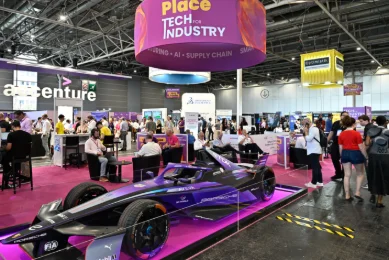
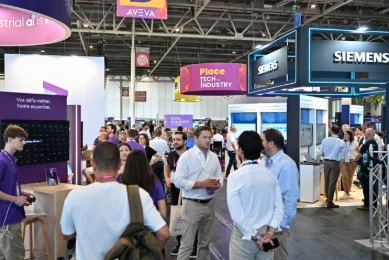
At Tech for Industry Show 2026, Jean-Baptiste Pernot (ACC) and Pascal Bourcet (Siemens Digital Industries Software) presented the levers of the European battery industry. ACC explained that it wants to localise the whole value chain, not only final assembly, with a minimum goal: robust refining capacity in Europe, even if mining stays elsewhere. That is precisely the link EMME targets. Read the article
Jean-Baptiste Pernot also noted that recycling of end-of-life batteries will only peak after 2035, given a 15-year lifespan for current batteries.
Frequently asked questions
What is the EMME project?
Electro Mobility Materials Europe is a plant project in Parempuyre, in the Gironde department, to produce battery-grade nickel sulphate and cobalt sulphate, for an investment of around €500 million.
When will the EMME plant start operating?
The project website announces operation from 2028. The official launch takes place on 10/11/2026, attended by the minister delegate for Industry.
How many jobs are planned?
500 jobs, including 200 direct jobs on site, according to the EMME project.
Who will the plant sell to?
European players in electric mobility, in particular makers of cathode materials and battery cells.